An Everywhere of Light
carlier | gebauer, 2022
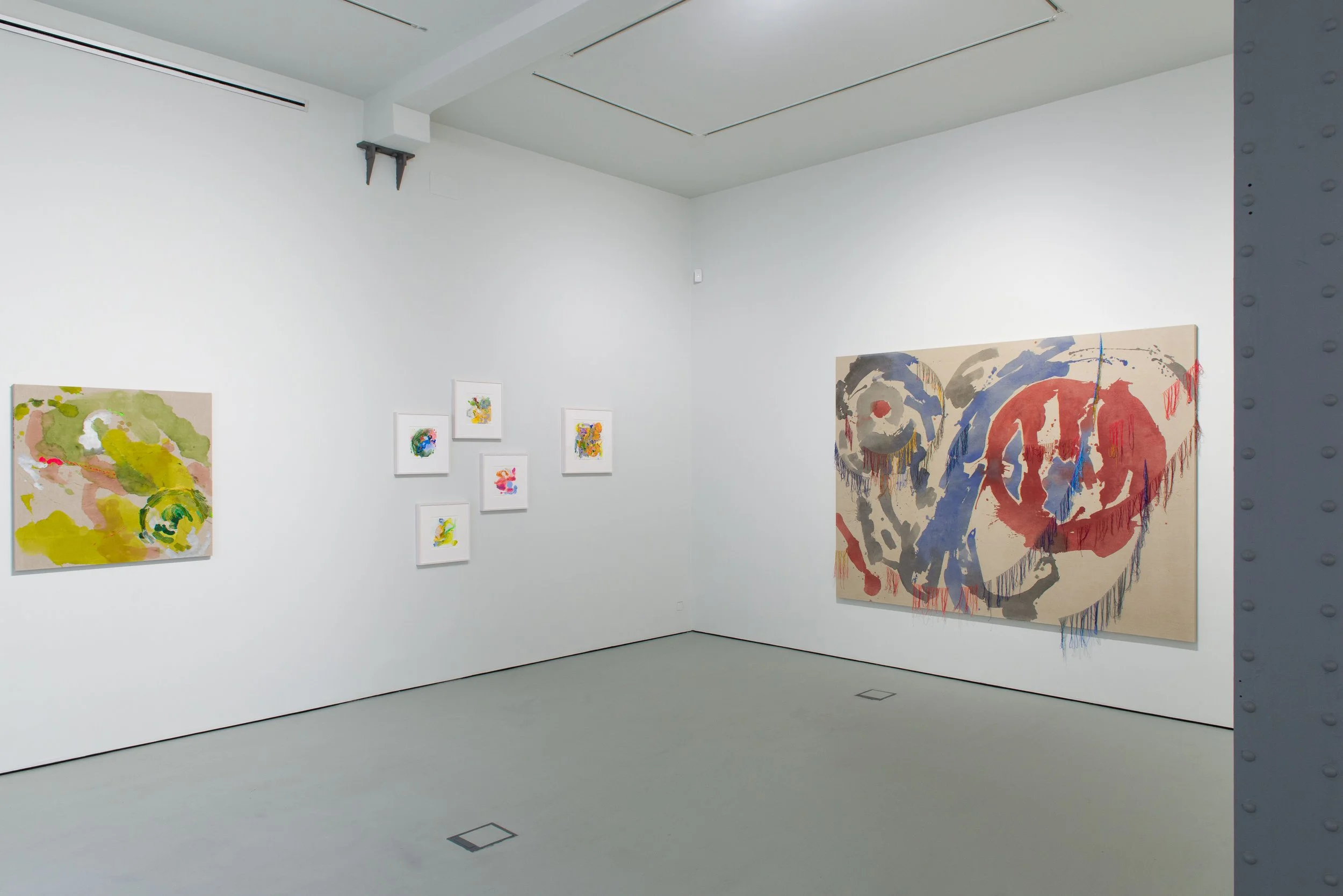
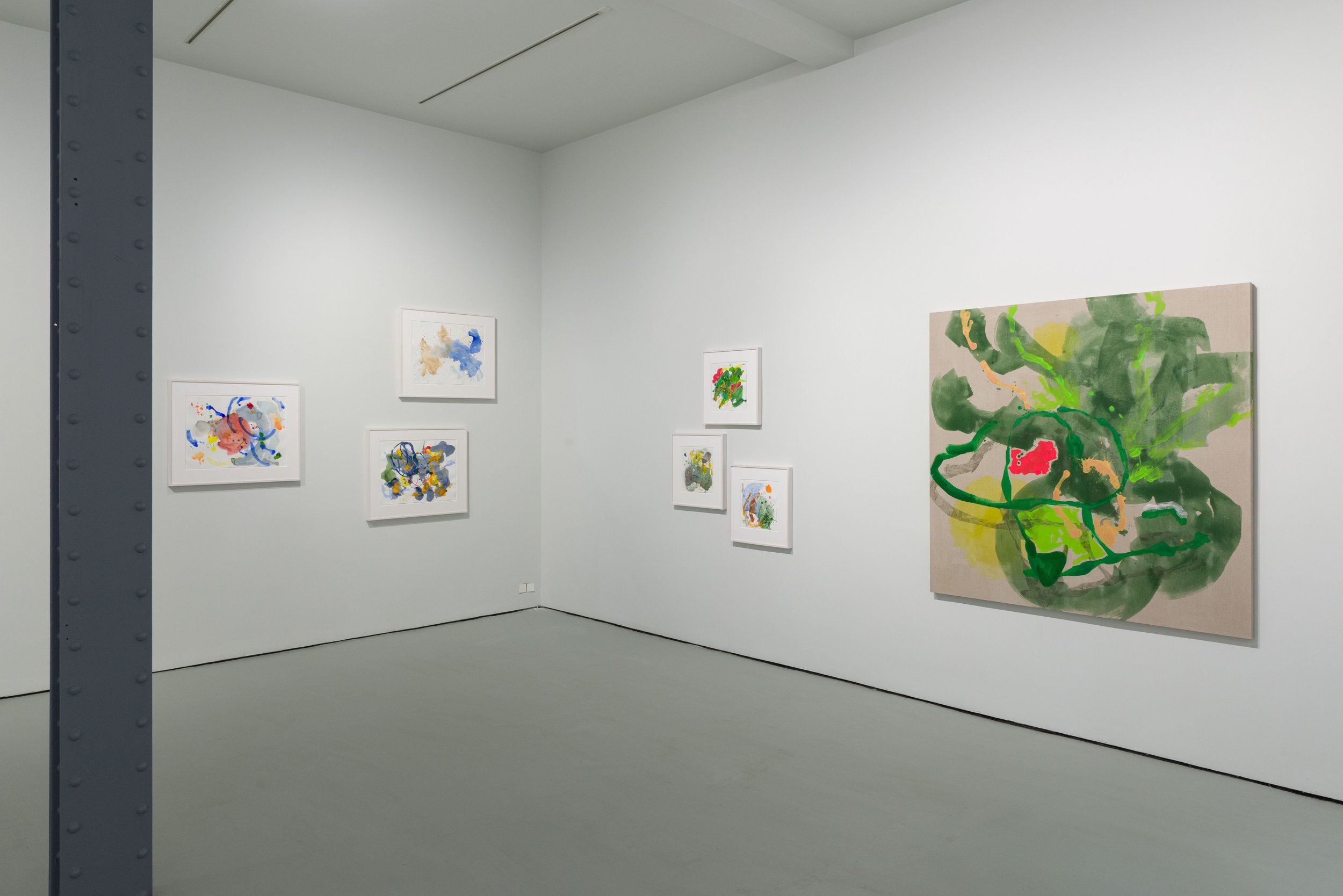
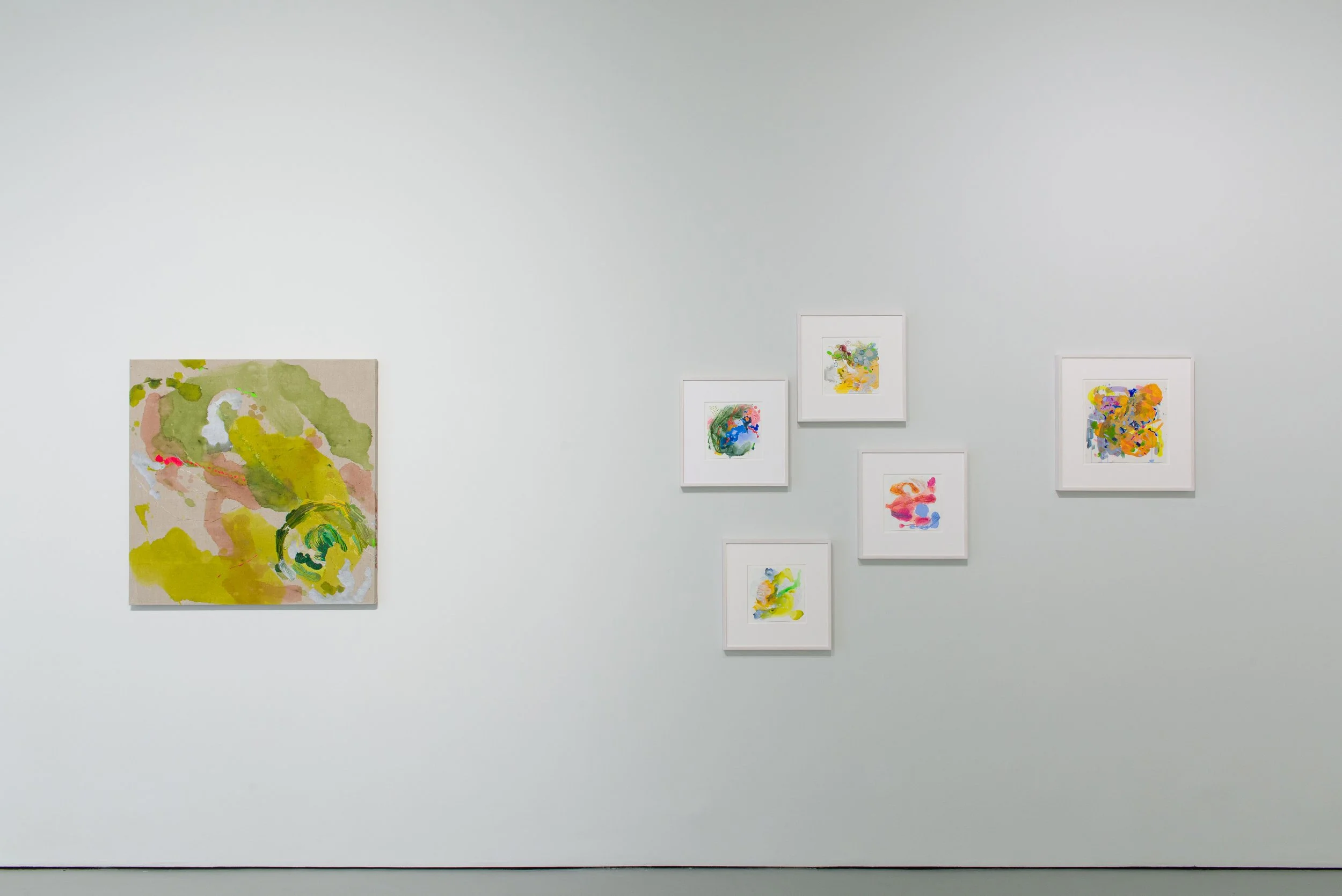
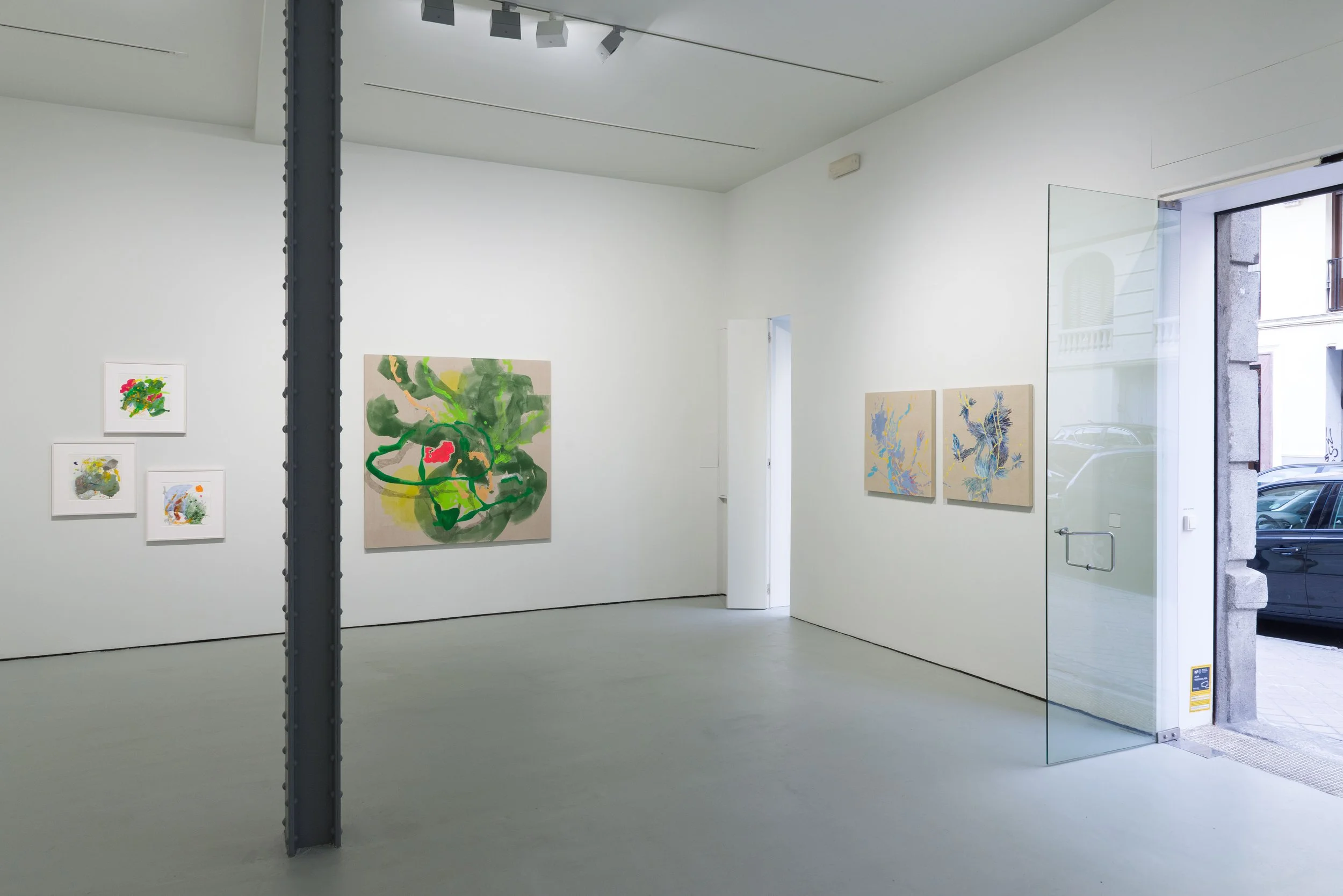
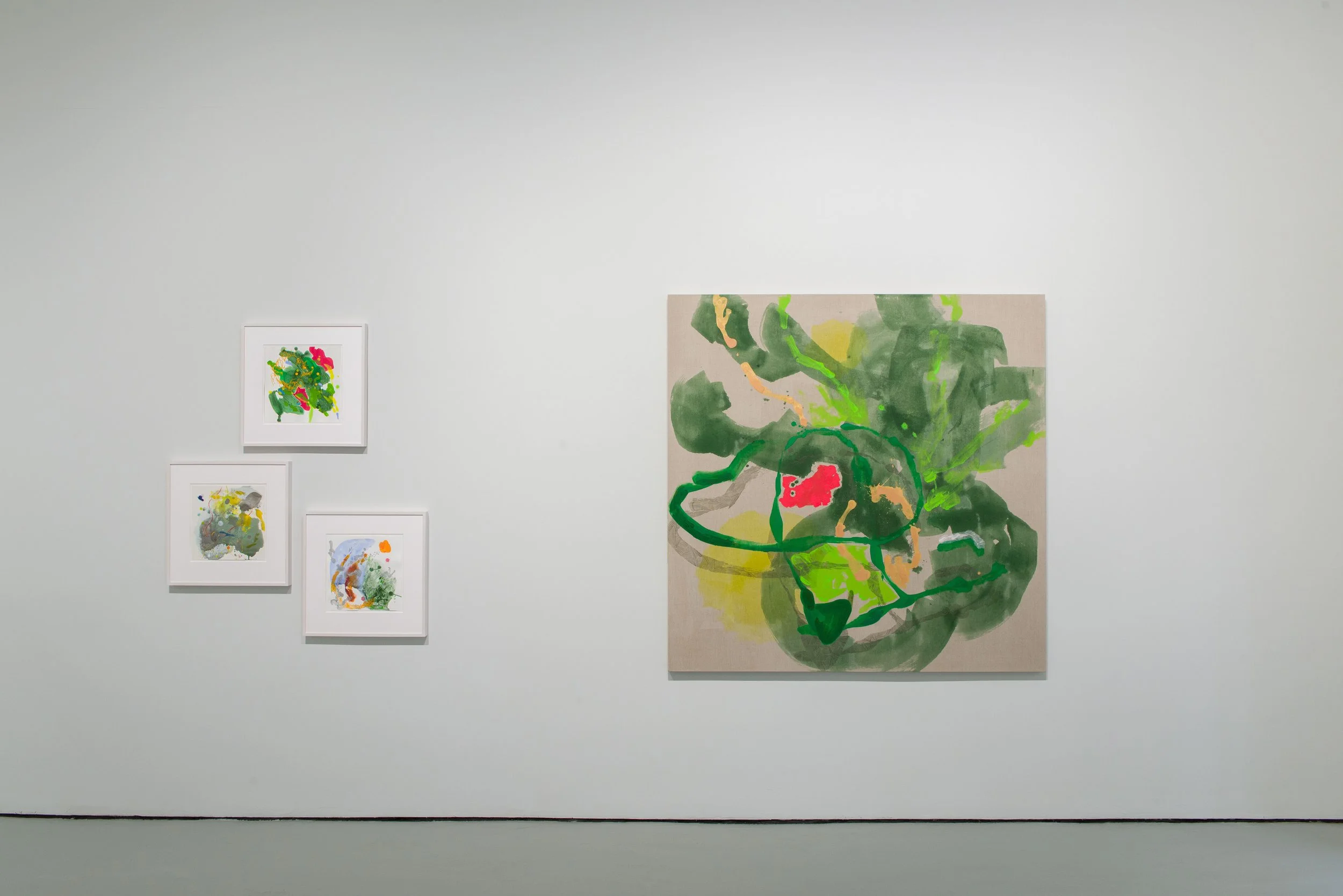
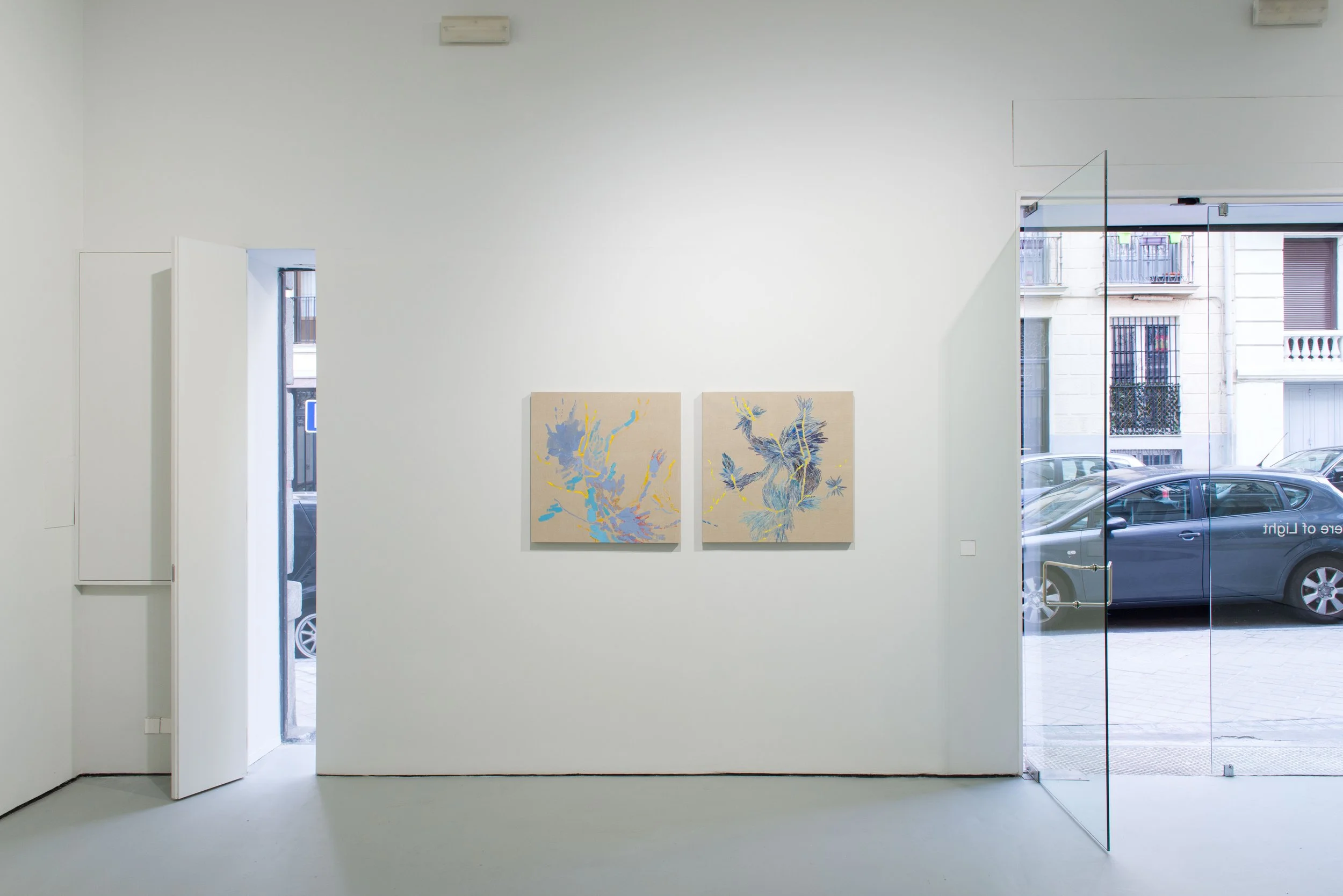
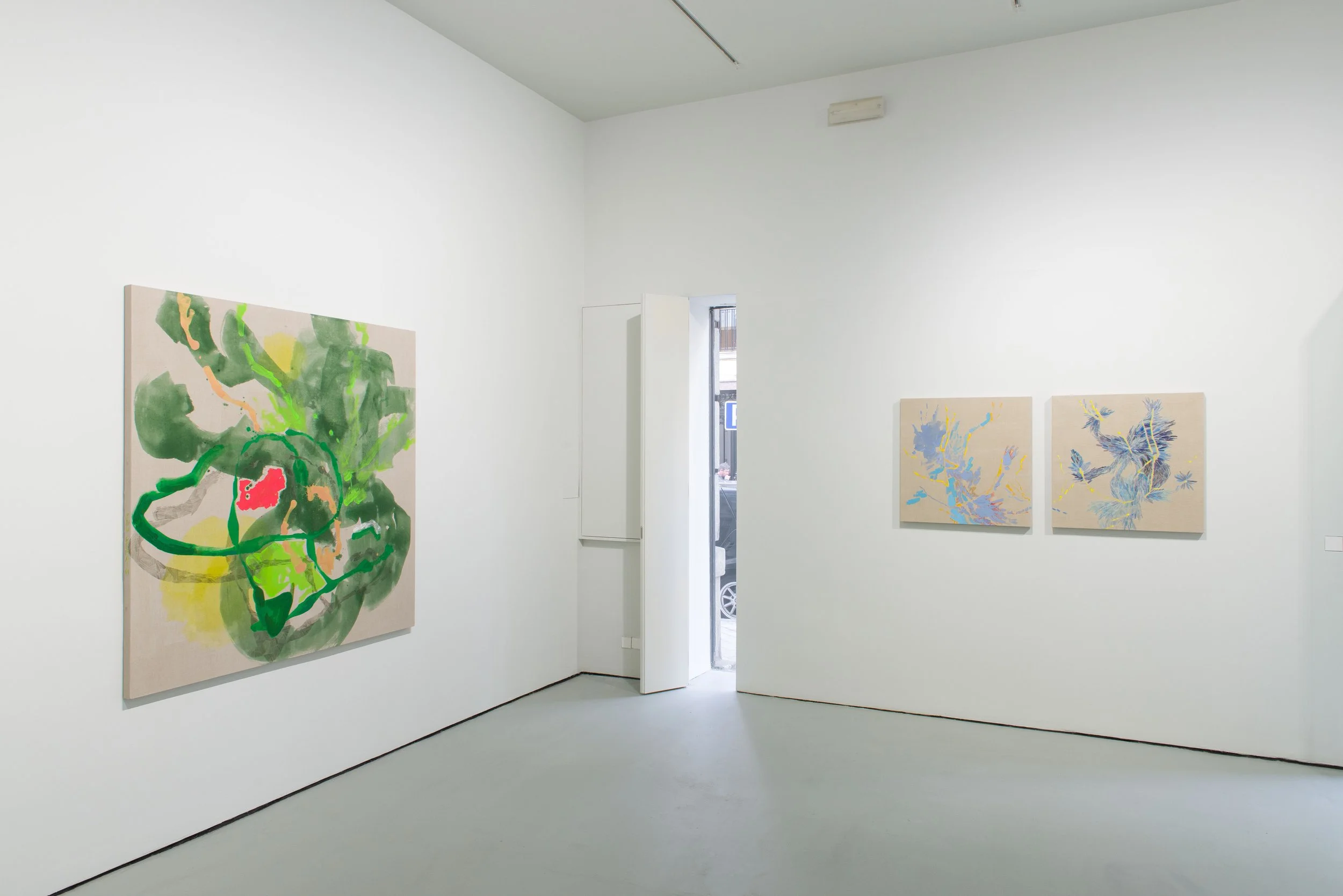
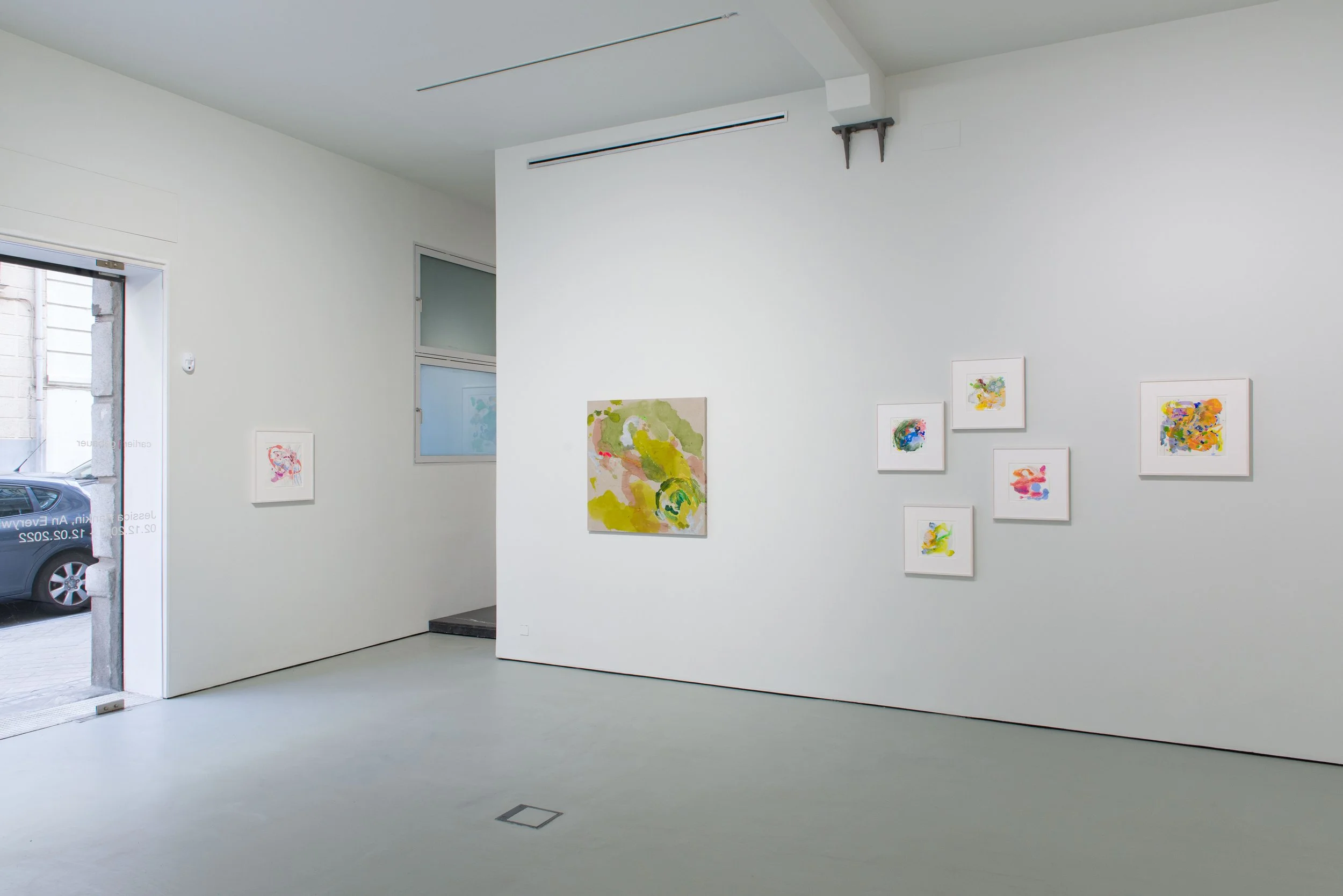
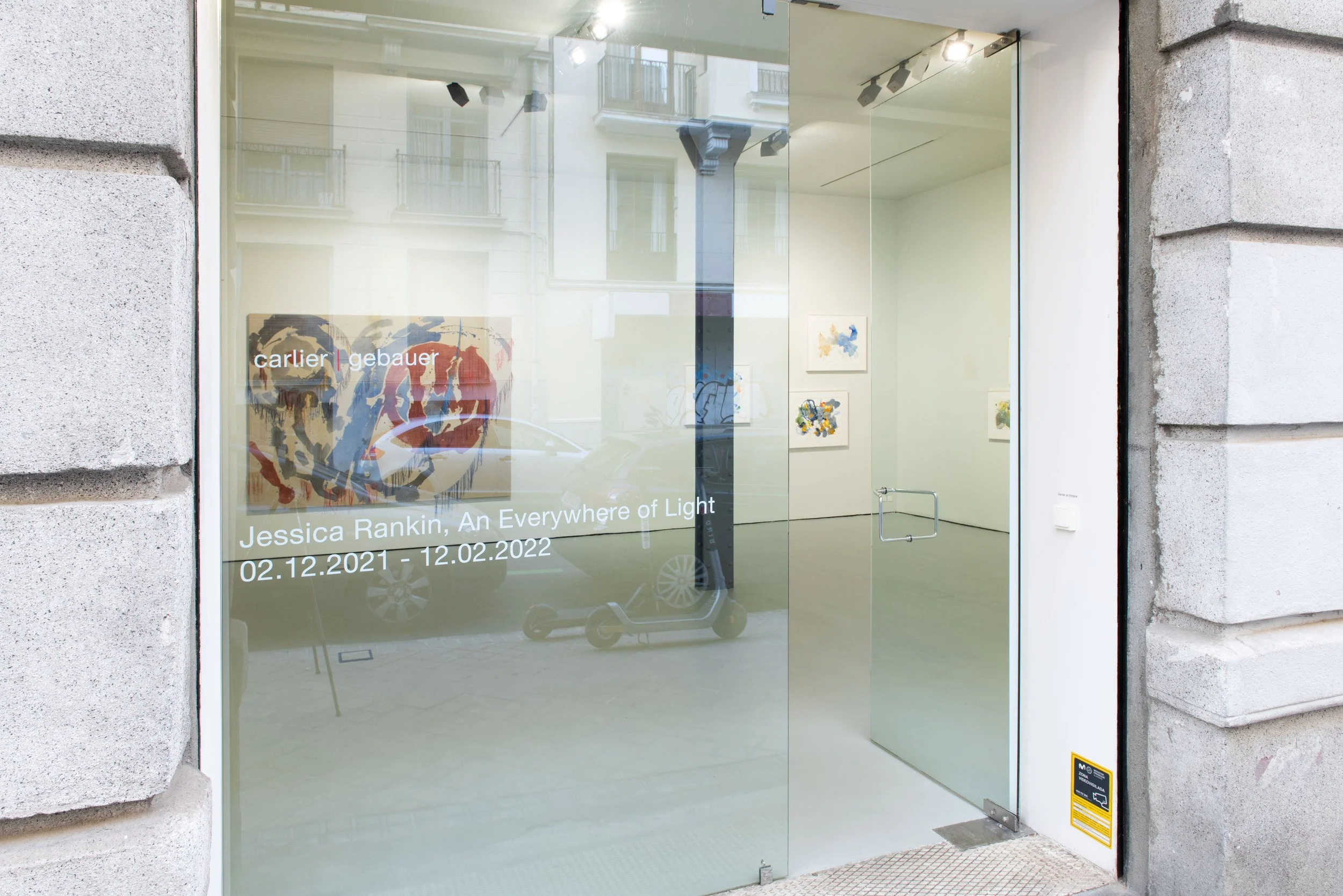
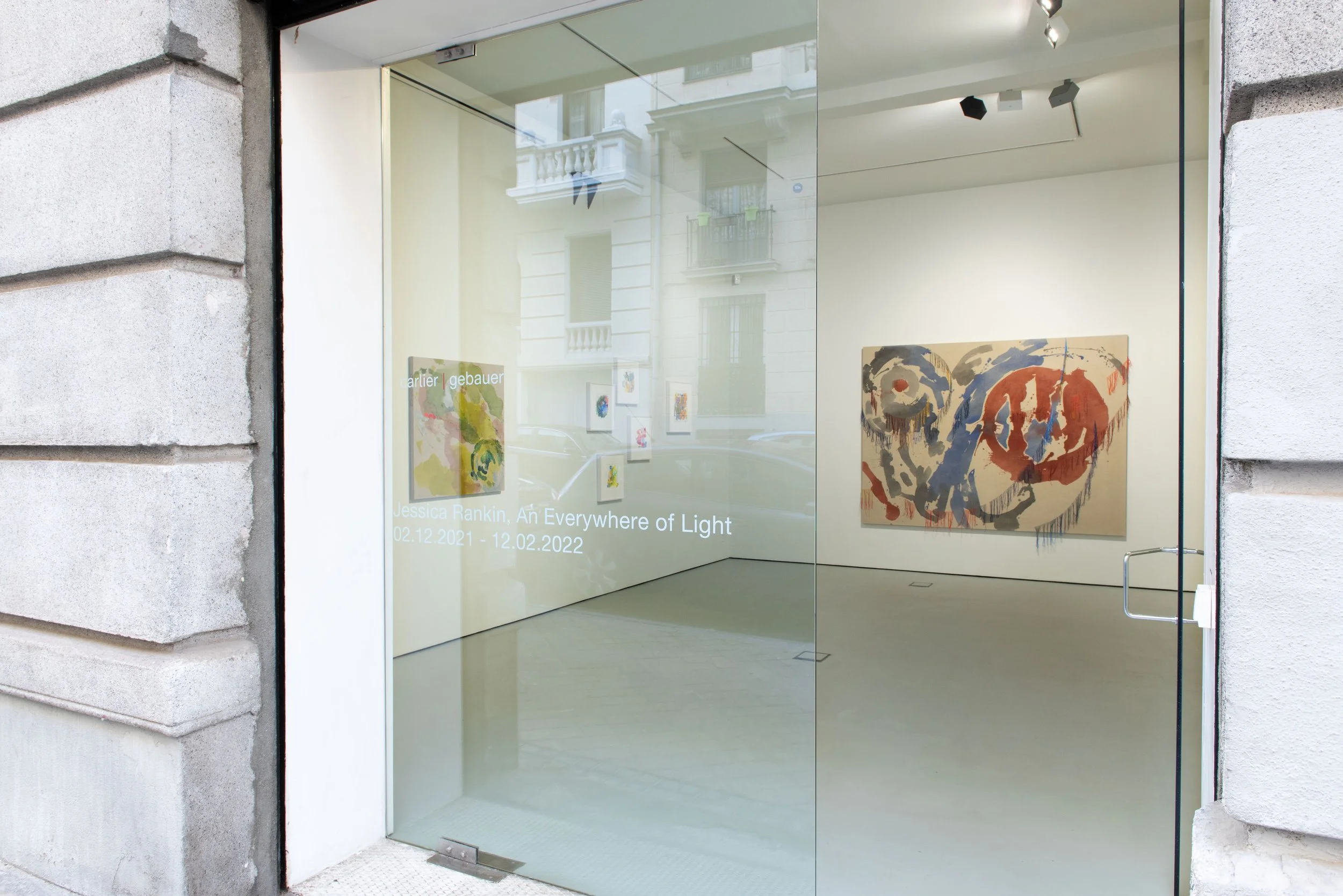
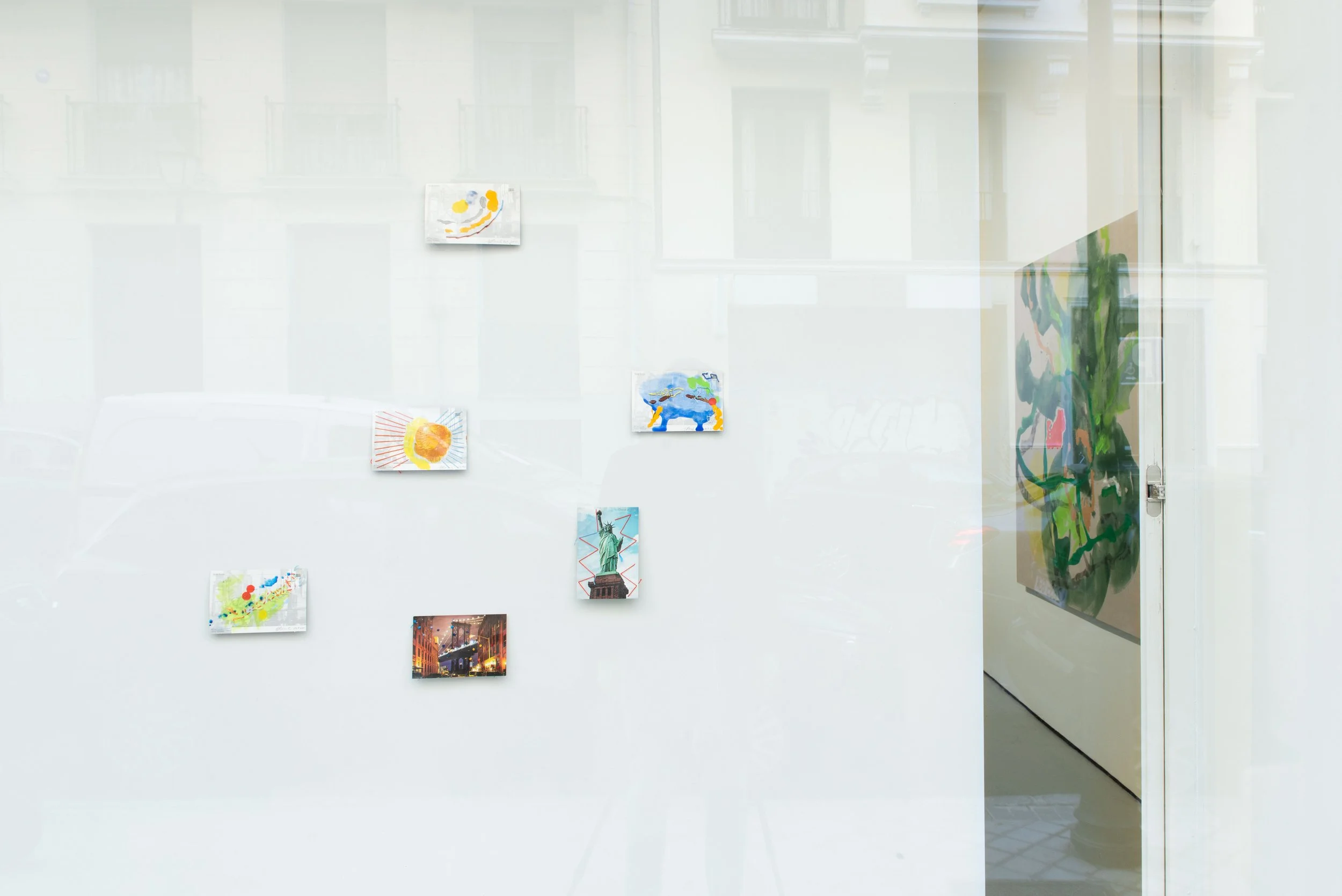
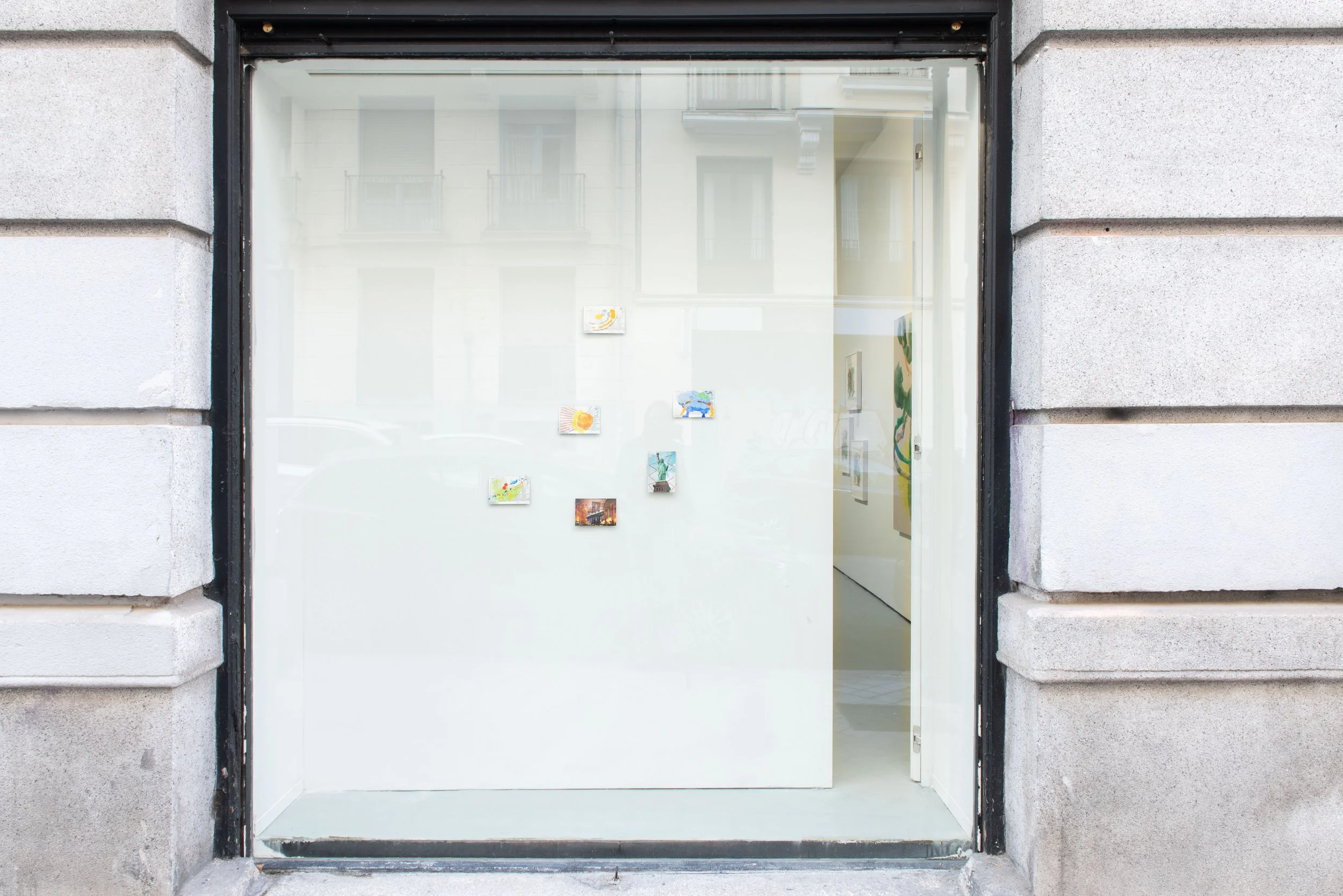
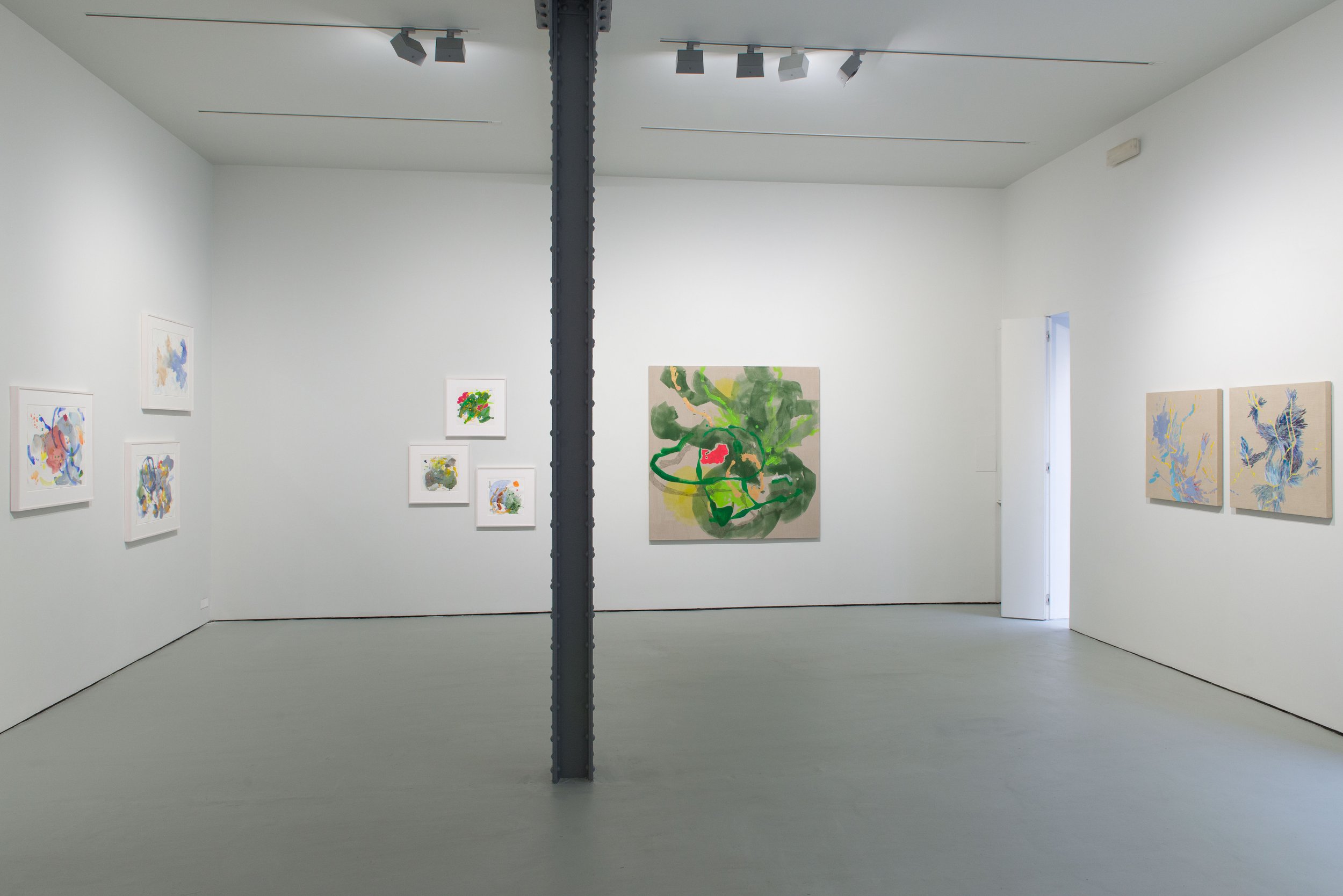
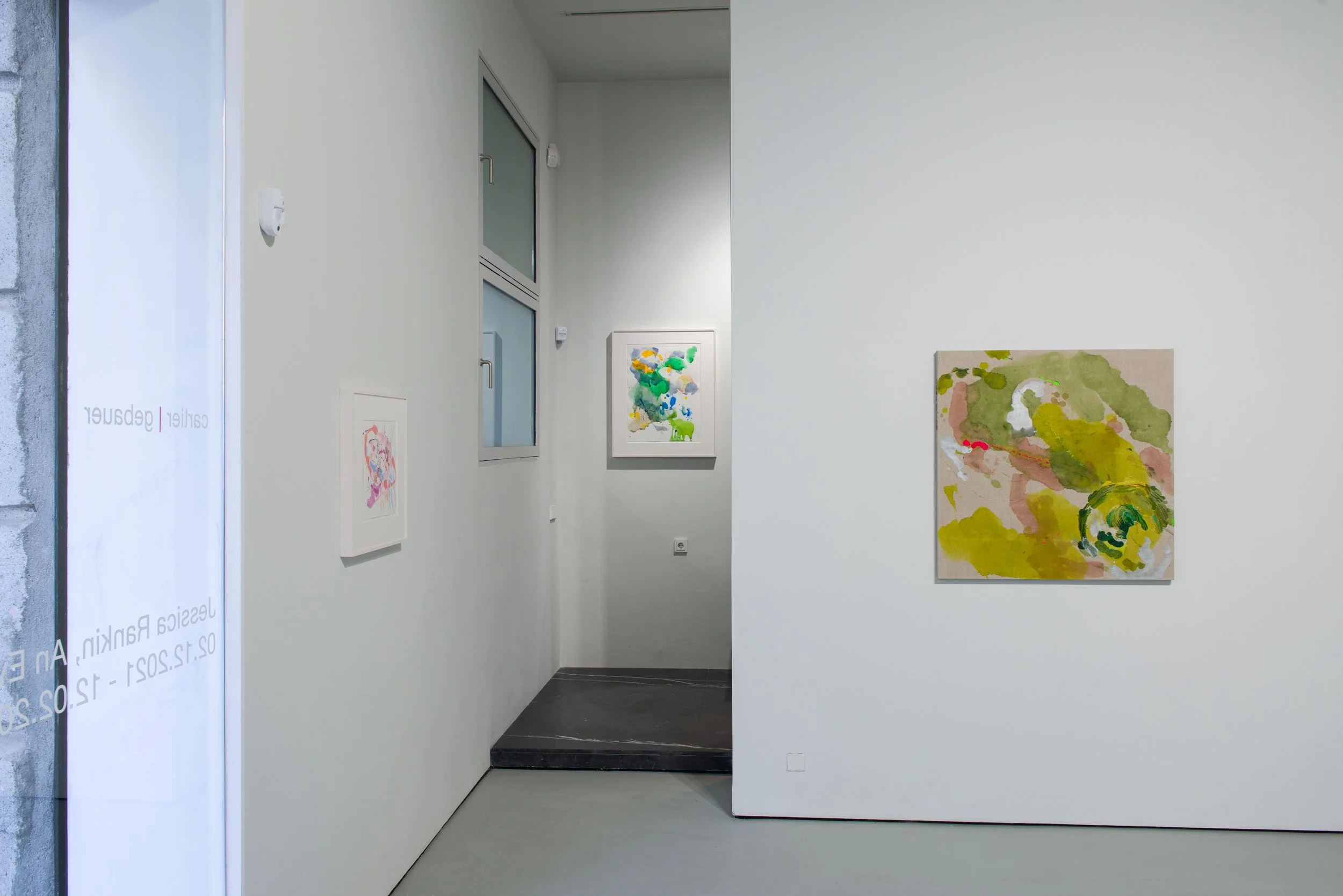
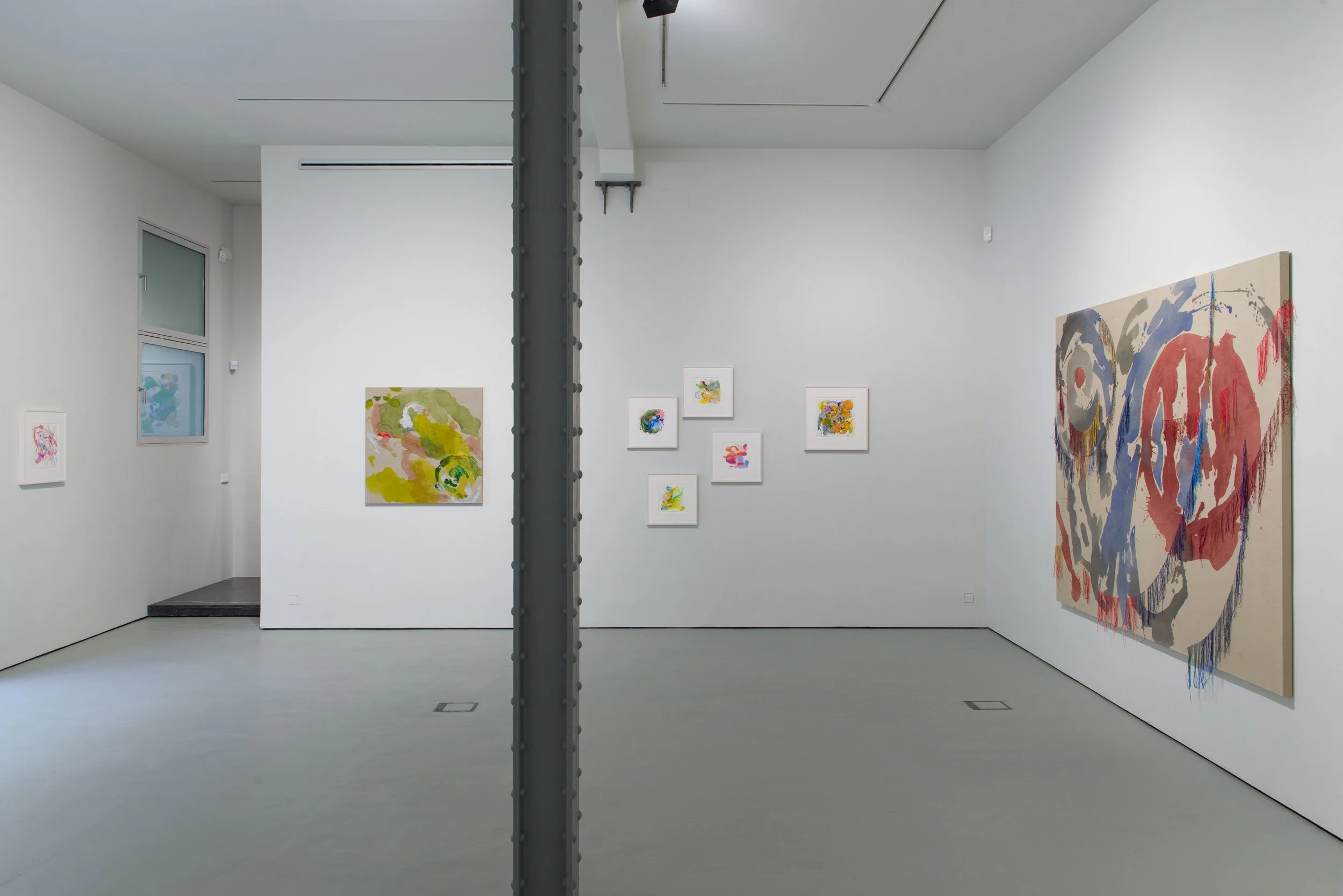
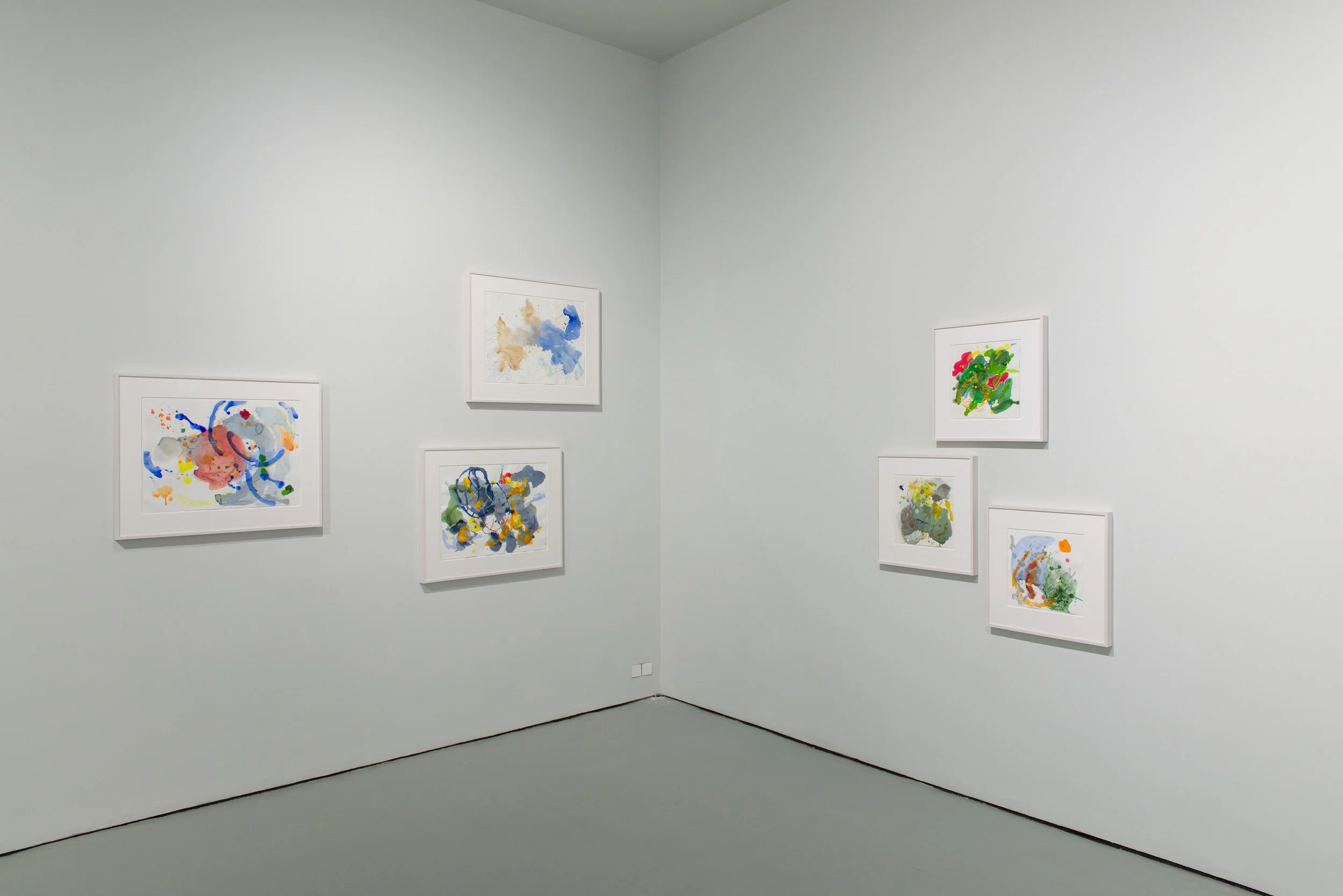
Jessica Rankin’s paintings emerge from conversation: between different material and media,between the visual and the textual, and between one artist’s practice and the work of other thinkers and makers. Expansive and intuitive, her newest works are marked by swathes of vi- brant color that appear as stains, splotches, or coiling lines. These exuberant composition spill over to the sides of the canvas, which reveal intricately threaded lines of poetry by writers such as Carl Phillips, Kamilah Aisha Moon, or Etel Adnan, whose writings have in- spired Rankin’s work.
Jessica Rankin has described the medium of embroidery as a gateway to a different way of thinking about making. A constant in her practice, Rankin’s applications of this historical- ly “minor” medium have ranged from attempts to materially capture the nature of thought and language—thereby playing with notions of speed, layering, and legibility in densely layered accumulations of embroidered text on delicate organdy—to her more recent investigations of the language of painting. In her newest works, thread alternately continues or interrupts the painted gesture—and at times the embroidered elements of the composition are practically indistinguishable from the painted surface. The material ambiguity present in Rankin’s mark- making troubles conventional hierarchies of painting, thereby complicating notions of ex- pressive mark making and heroic gesture.
Compelled by an intuitive and exploratory approach, Rankin avoids establishing patterns in her process. She paints without a clear sense of a plan, with each mark or gesture respond- ing to that which came before it. Every time a process seems to emerge, Rankin tries to upend it. “I try to keep myself in that state of unknowing for as long as possible,” she explains, “holding onto the Cageian adage to ‘be unfamiliar to yourself.’” Rankin extends this notion into her formal decisions, purposefully working with strong colors and seemingly off-kilter compositions to create a sense of push and pull in her works, pushing a form to its lim- its before salvaging it and bringing it back from the brink. The precarious beauty of these works derives from Rankin’s thinking of painting as a realm of world building, drawing upon the ways that joy, desire, intimacy, and tenderness permeate the language of the poets that inspire her and create powerful spaces of resistance.